

What is Gastric Bypass surgery?
Gastric bypass is one of the most established forms of weight loss surgery, making up around 30 to 40% of bariatric procedures performed in Australia each year. It works by creating a smaller stomach pouch and rerouting part of the small bowel, so you feel full sooner and absorb fewer calories from food.
There are two main ways we perform gastric bypass at Perth Weight Loss & Surgery: the Roux-en-Y Gastric Bypass and the One Anastomosis Gastric Bypass (also known as the Mini Gastric Bypass or Omega Loop). Both are proven, effective procedures. The right one for you depends on your health history, your goals, and what Dr Siva Gounder recommends after your consultation.
Two Ways We Perform Gastric Bypass
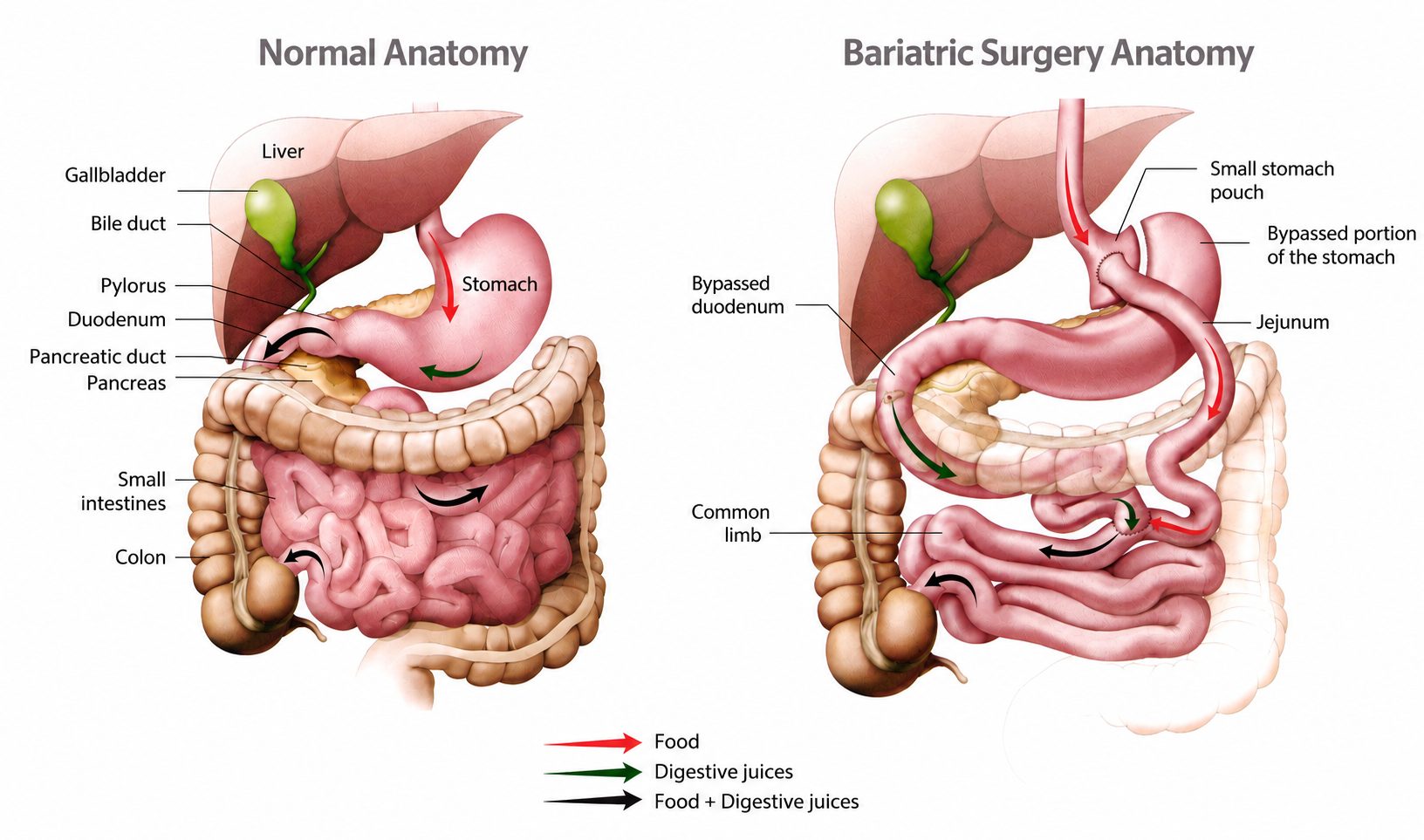
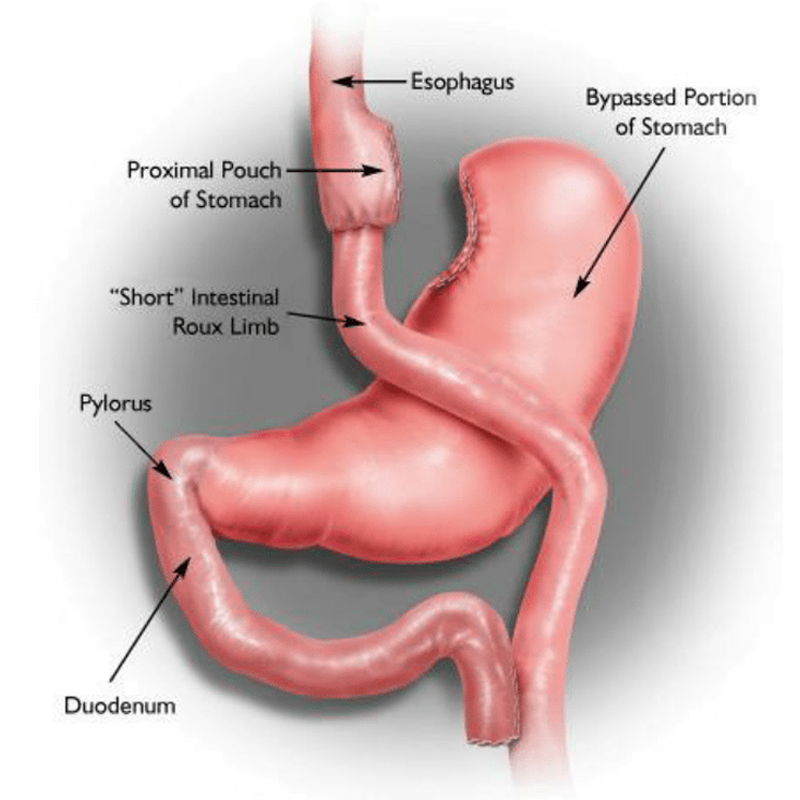
Roux-en-Y gastric bypas
The traditional gastric bypass is still considered the gold standard by many surgeons worldwide. A small pouch is created at the top of the stomach, and the small bowel is divided and rejoined in a Y-shaped configuration, with two new connections. This design has over 40 years of data behind it.
More Information

Alternatives to Gastric Band Surgery
When you’re considering weight loss surgery, the most common procedure that comes to mind is lap-band, also known as gastric band surgery. This procedure involves placing an adjustable silicon ba...
Read The BlogAlternatives to Gastric Band Surgery
Learning About Gastric Bypass Surgery: Before and After
In deciding to explore the possibility of undergoing gastric bypass surgery, you are already taking positive steps forward for your health. It is normal to face some apprehension, however, you can tru...
Read The BlogLearning About Gastric Bypass Surgery: Before and After
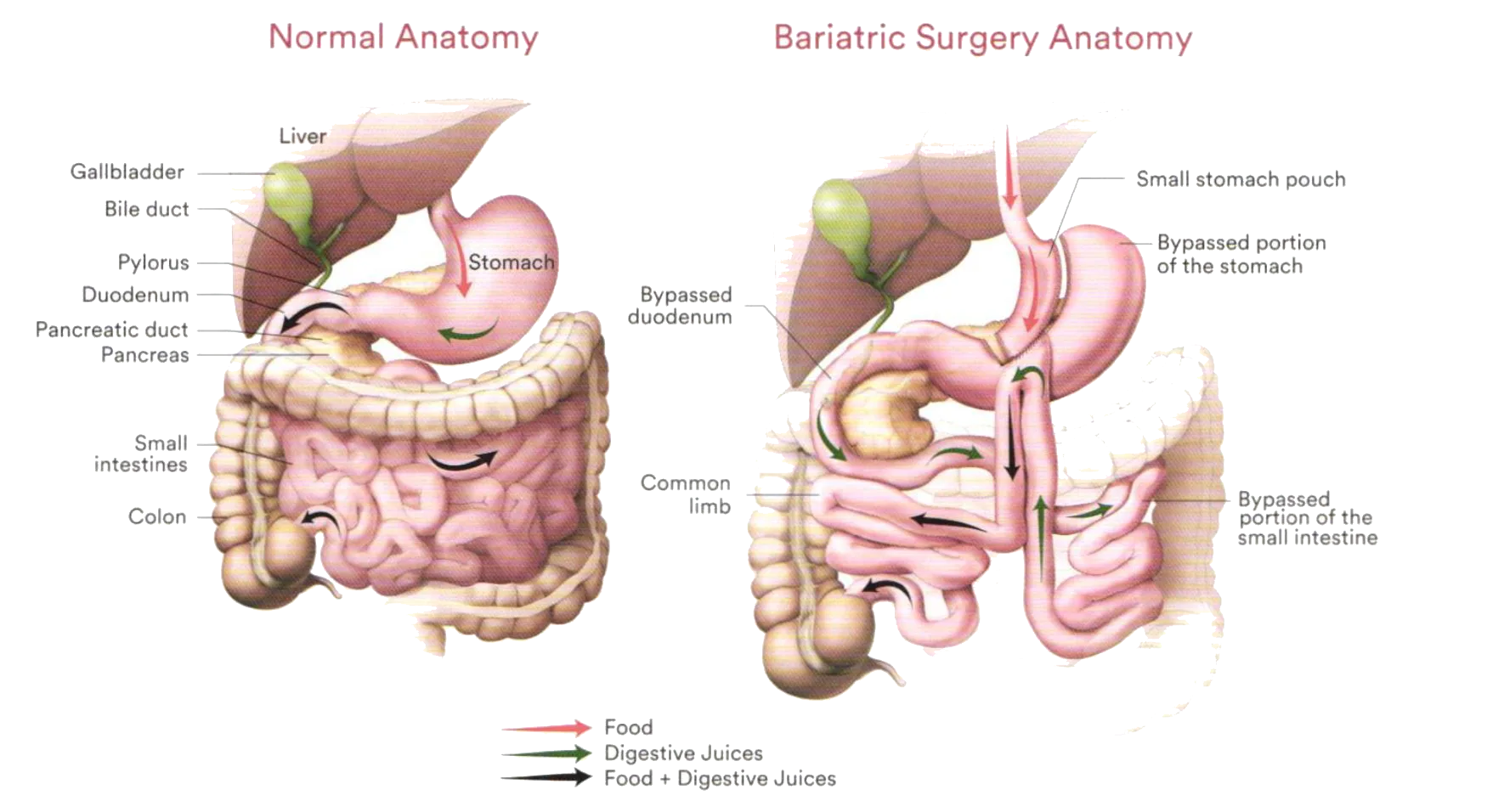
One Anastomosis Gastric Bypass
A newer, simplified version of the bypass. A longer, narrower pouch is created, and the small bowel is joined to it with just one new connection, rather than two.
It’s a shorter operation with a similar safety profile and has become increasingly common in Australia over the past decade.
Comparing The Two Options
| Traditional Bypass (Roux-en-Y) | Anastomosis Bypass (OAGB / Mini) | |
|---|---|---|
| Also known as | RYGB, traditional bypass | OAGB, Mini Gastric Bypass, Omega Loop |
| Number of bowel connections | Two | One |
| Typical operating time | 1 to 2 hours | Slightly shorter, due to one connection instead of two |
| Effect on reflux (GORD) | Excellent (Diverts both acid and bile) | Poor (High risk of chronic bile reflux) |
| Surgical Complexity | Higher (Requires two connections) | Lower (Requires one connection) |
| Primary Suitability | Patients with pre-existing GERD or severe heartburn | Patients wanting shorter surgical times without pre-existing reflux |
| Nutritional follow-up | Lifelong vitamin and mineral supplementation required | Lifelong vitamin and mineral supplementation required, with close monitoring |
| Dr Siva Gounder's Recommendation | This is Dr Siva's recommended bypass for patients, which will benefit the patient by having a better quality of life after surgery. | This surgery is also performed by Dr Siva on specific cases that need this. He won't recommend this option as the first choice. The patient will have follow-up appointments to track any consequences related to reflux. |
Advantages and Considerations
Roux-en-Y Gastric Bypass
Advantages
- Decades of long-term data and results
- Strong, well-documented improvement in reflux symptoms
- Excellent results for blood sugar control in patients with type 2 diabetes
Considerations
- Two bowel connections means a slightly longer operation
- Small risk of ulcer at the join (under 5%)
- Risk of dumping syndrome (around 20 to 30%)
- Small risk of internal hernia
- More complex to reverse or revise later if required
One Anastomosis Gastric Bypass
Advantages
- Shorter operating time, with one connection instead of two
- Strong weight loss results, comparable to or slightly better than RYGB in some studies
- Simpler to revise or convert to another procedure later if needed
Considerations
- A small number of patients may develop new reflux symptoms after surgery
- Similar risks to RYGB around ulcer formation and dumping syndrome
- Requires the same lifelong commitment to supplementation and follow-up
How The Surgery Is Performed
Both procedures are done laparoscopically (keyhole surgery), through several small cuts in the abdomen. Dr Gounder uses a telescope and fine instruments to create a tunnel behind the stomach, then uses a stapling device to form the smaller pouch. The small bowel is then joined to this new pouch, either in one connection (OAGB) or two (RYGB).
Most patients are in the hospital for around 2 nights. As with any surgery, there are risks, including bleeding, bowel obstruction, or leakage from the staple line, occurring in around 1% of cases.
Which One Is Right for You?
Neither option is universally “better”. Dr Gounder will talk you through which approach suits your body, your medical history, and your goals, including whether you have existing reflux, your BMI, and any previous abdominal surgery. This is why a consultation, rather than a website, is the right place to make this decision.

You are not alone in your weight loss journey.
IT'S LIFE changing
Your Surgery Options
Lap Band Surgery
A Gastric Band, commonly referred to as a lap-band, is a silicon-based adjustable device, surgically plac....
Read MoreGastric Sleeve Perth
Gastric sleeve surgery, or laparoscopic sleeve gastrectomy, is a keyhole surgery where a part of the stom....
Read MoreRevision Bariatric Surgery
Revision bariatric surgery is a procedure completed on patients who have already received bariatric surg....
Read MoreGastric Bypass Surgery Perth
Gastric bypass is one of the most established forms of weight loss surgery, making up around 30 to 40% of....
Read MoreSADI-S/SIPS Surgery
Single Anastomosis Duodeno-Ileal Switch (SADI-S) or Stomach Intestine Sparing Surgery (SIPS) is a procedu....
Read MoreSASI-S Surgery
Single Anastomosis Stomach-Ileal Bypass (or SASI-S Bypass) is a combination of a sleeve gastrectomy and a....
Read More
