What Happens When We’re All in the Same Room
By the Perth Weight Loss & Surgery team — Dr Siva Gounder, Emily Davidson, Shane Johnstone
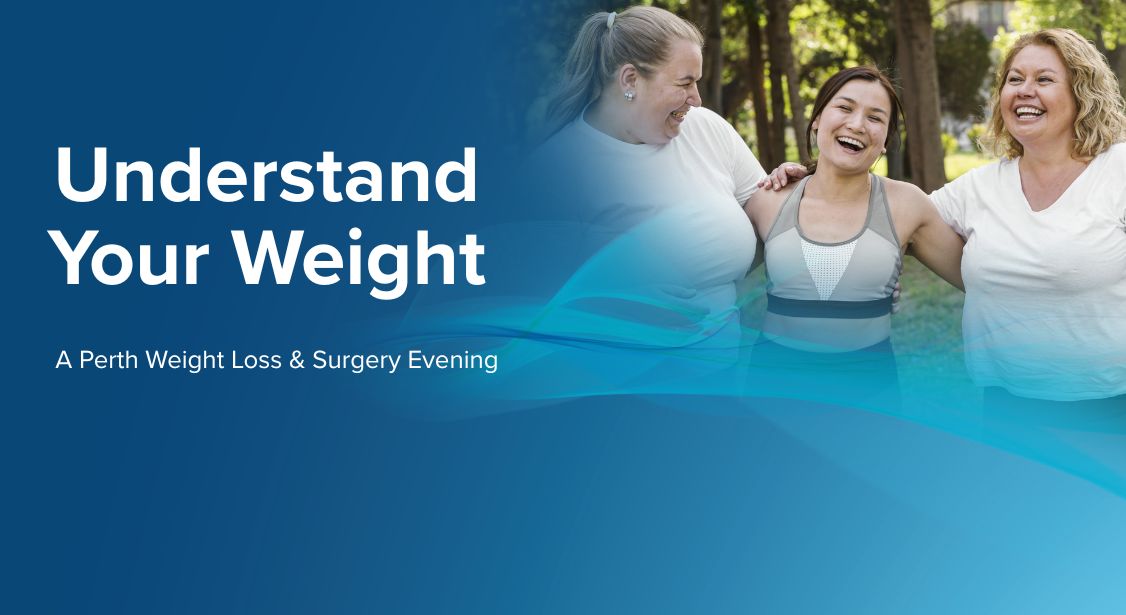
Every time we bring people together for one of our information evenings, something shifts. Not just for the people who attend, but for us too.
We leave every event reminded of why this work matters. Because when people living with obesity finally sit in a room where no one is judging them, where every question is welcomed, and where they can hear someone else say, “I felt exactly that way too,” something unlocks. The fear softens. The questions come. And real conversations begin.
We wanted to share some of what happened at our last event. Because if you’re sitting on the fence about joining us on 13 May, we hope this gives you a reason to come.
Obesity affects your whole body and most people don’t realise how much
One of the first things Dr Gounder walks through on the night is how adipose tissue (AT) dysfunction, what happens inside the body when obesity is present, reaches into almost every system. Cardiovascular health, respiratory function, neurological wellbeing, hormones, the immune system, gut health, kidney function, joints, and mental health. Even cancer risk.
This isn’t shared to frighten anyone. It’s shared because most people in the room have spent years being told their weight is a lifestyle problem. Seeing the medical picture clearly, often for the first time, is genuinely liberating. “So this is why I’ve been feeling this way.” That moment of recognition happens in the room, every single time.
Conditions like type 2 diabetes, fertility challenges, sleep apnoea, joint pain, and depression don’t exist in isolation from obesity. They’re connected. And treating obesity as the medical condition it is often improves all of them.
Your BMI is not the whole story and it never was
Australia is one of the most multicultural countries in the world, and one of the conversations that consistently surprises people is around BMI. The standard BMI thresholds were built on a narrow dataset. They don’t account for differences in body composition across ethnic backgrounds, age, gender, or family history.
What this means practically: two people with the same BMI can have very different health profiles and very different treatment needs. At Perth Weight Loss & Surgery, we treat you, your background, your body, and your circumstances, not a number on a chart.
Medication is a tool. Knowing how to use it changes everything.
There is still so much confusion and stigma around weight loss medication. At our events, Dr Gounder addresses this directly. GLP-1 medications are not a shortcut. They’re a clinically proven medical tool, and like any tool, their effectiveness depends entirely on how and when they’re used, and what surrounds them.
Understanding the role of medication within a broader plan, including nutrition, movement, and potentially surgery, is what separates short-term results from long-term change.
Muscle mass: the conversation nobody was expecting
Shane works with patients on movement and exercise, and without fail, the muscle mass conversation is one that catches people off guard, in the best way.
Most people assume that weight loss is weight loss. But the relationship between fat mass and muscle mass is nuanced, and it’s different for men and women. Preserving and building muscle during a weight loss journey, whether surgical or non-surgical, fundamentally changes outcomes. Energy, metabolism, strength, recovery, and long-term weight maintenance. At our events, Shane breaks this down with examples that make it immediately tangible. The looks on people’s faces when they realise what’s actually been happening in their bodies are worth the entire evening.
Exercise myths get dismantled too. The idea that you need to be fit before you start moving. That certain exercises are off-limits. That pain is part of the process. Shane gives the room practical, honest, safe guidance and people leave with something they can actually start this week, not someday.
Food is not the enemy. It never was.
Emily works with patients on nutrition, and her part of the evening is always one of the most emotionally resonant. Because food is complicated. It’s tied to culture, to family, to comfort, to identity. And for people who have spent years in a difficult relationship with eating, being told by a dietitian that enjoying food is the goal, not restricting it, can feel almost radical.
Whether you’re on a medication pathway, preparing for surgery, or recovering post-op, nutrition looks different at every stage. Emily walks through what eating actually looks like after surgery, addressing the fears honestly, and how building genuine food habits (ones that involve pleasure, not punishment) is what creates lasting change.
Goals and habits: it’s not about wanting them enough
One of the most common things we hear from people living with obesity is some version of “I just need more willpower.” Our events exist, in part, to retire that sentence permanently.
Goals without the right structure around them don’t stick, not because of personal failure, but because of biology and environment. The conversation in the room shifts from “why can’t I do this?” to “here’s what actually works, and here’s why.” That’s a very different starting point.
The number is not the point. Your daily life is.
Success after bariatric surgery or a medication journey is not a number on a scale. It’s the energy to play with your kids. It’s sleeping through the night. It’s moving without pain. It’s walking into a room and feeling like yourself.
At every event, patients who’ve been through the journey come and share theirs, the real version, including the hard parts, the adjustments, the moments of doubt, and what came out the other side. These stories are not sales pitches. They’re human beings talking to other human beings. And they change the conversation entirely.
Change is possible. And it doesn’t have to be frightening.
What we take away from every event, as a team, is that people are more ready than they think they are. They just need the right information, the right support, and the right room to ask their questions without fear of judgment. That’s exactly what we’re creating again on Wednesday 13 May.
If you’ve been wondering whether surgery or medication is right for you. If you’ve been living with the weight of unanswered questions. If you’ve been waiting for a sign that it’s safe to take the next step — this is it.
Join us. The room is waiting for you.